Monday, June 11, 2007

Tourism target may be hard to hit

Fears are growing deep within the heart of one of B.C.'s traditionally most optimistic industries.

Representatives of the tourism sector say they are in the fight of their lives to meet the challenge thrown at them earlier this year by Premier Gordon Campbell to double annual tourism revenues to $18 billion by 2015.

"It is going to be one hell of a stretch," concedes Phil Barnes, regional vice-president of Fairmont Hotels & Resorts.

"You have to remember that rival destinations out there are trying to steal our business."

Barnes says that while reaching Campbell's goal isn't impossible, it will take a monumental joint effort from everyone in the industry -- and a whole lot more cash.

"We have to realize that we cannot be all things to all people and must concentrate on the regions that will bring us the highest yields, while not forgetting the rest of the world," he says.

Tourism Vancouver boss Rick Antonson acknowledges the industry is tiptoeing along a tight line and anticipates there will be some post-2010 Winter Olympics fallout.

To this end, Tourism Vancouver has departed from past practice and produced a new strategic plan and direction from 2008 out to 2015.

The plan, released late last week, boldly states that "by 2015, Vancouver will surpass the previously forecasted $5.8 billion in incremental tourism revenue." It is now worth about $4.4 billion annually.

Somewhat less boldly, the plan also acknowledges that between next year and 2015 Vancouver will need to attract a higher-yield customer base driven by convention and long-haul leisure business.

And this, Antonson readily acknowledges, is where it gets tricky.

To do this will require a 17-per-cent increase in total spending by Canadian tourists, 20-per-cent growth from the highly lucrative U.S. market and a 59-per-cent jump in the international market.

Breaking it down further, the numbers are equally challenging.

Hitting Campbell's target will require 52-per-cent growth in convention business, 26 per cent in long-haul leisure revenue, 23-per-cent growth in corporate business, a 14-per-cent jump in independent revenue and seven-per-cent growth in short-haul leisure business.

The U.S. market is causing the most worries as it is already in a downward mode, primarily because of terrorism/border concerns and a fear by Americans of travelling outside their borders.

Throw in the unexpected stratospheric rise of the Canadian dollar and the problems multiply.

And then there is the newly expanding convention centre.

Putting aside the enormous cost overruns, now heading toward the $900-million mark from the original budgeted $495 million, there are real concerns about bookings post-2010.

The convention centre is a linchpin to Tourism Vancouver's long-term strategy, and the current numbers are not exactly robust, although it is early days.

Former Tourism Vancouver chairman Jim Storie told the organization's annual meeting last week that the centre has occupancy rates of 38 per cent for 2011, 28 per cent for 2012 and three per cent in 2013.

Just to get to a respectable level from 2010 to 2015 would take the booking of 70 to 80 new conventions by the end of 2009.

Conventions are a huge earner for the city and in 2006 contributed more than $1 billion to the Greater Vancouver economy.

A further critical need is for the sales and marketing structure of the convention centre to be made accountable to the industry for performance, says Antonson.

Currently, responsibility is shared between Tourism Vancouver and the Vancouver Convention & Exhibition Centre, but that must change, Antonson says.

While remaining confident "the centre will be worth every penny that is spent," he acknowledges that competition from other cities will be tough, even though Vancouver has been named the top destination for international meetings by the International Congress and Convention Association.

Antonson and Vancouver International Airport officials are jetting off to Manchester, England, this week to pitch for an International Routes conference in 2010. This is the group that decides where airlines fly, so it is big, he says.

Even bigger prey is the Alcoholics Anonymous convention, held every five years. Antonson says they are pitching for the 2020 conference, which is the biggest in the world and attracts 65,000 delegates. The decision on a venue will be made next year.

Other critical factors include significant incremental revenues from provincial sources, more hotel rooms and full implementation of the long-promised "open skies" air policy.

The Conservative government continues to sit on its undercarriage despite extolling the virtues and promising "open skies" would be more than a mirage.

Antonson remains confident about the future, even predicting that tourism will ultimately rival forestry as B.C.'s largest industry. But he says his group's current budget of $12 million is chump change when compared with Montreal's, $28 million, and Toronto's, $30 million.

It's simply not enough to get the job done, he says. Ideally, he would love to put more salespeople into Chicago, Texas, Washington and Europe.

Barbara Maple, president of the Vancouver Convention & Exhibition Centre, says there is absolutely no reason for panic.

"We are exactly on track of where we should be in this booking cycle," she says. "We have 54 events booked post-2009, and 29 of them would not have come here without the new convention centre because they need that space."

http://www.canada.com/theprovince/news/money/story.html?id=2345f909-9a55-4521-9579-8cd4815b4709&k=6445

468x60 ENG Banner

Is it loonie to visit Canada this summer? Not with these tips

With the Canadian dollar at its strongest against the U.S. dollar in 30 years, a weekend in Victoria or Vancouver, B.C., will cost you almost 7 percent more than it did last year, and that's not counting any changes in prices.

If the surge keeps up, the Canadian dollar, now worth 94 cents compared with an average 88 cents last year, could be worth as much as $1 U.S. by the end of the year, wiping out the discount that has made Canada an attractive travel destination for Americans.

"We're not the bargain we used to be for Americans," says Mara Jernigan, operator of Fairburn Farm, a culinary retreat and guesthouse in Vancouver Island's Cowichan Valley. Like many Canadian resorts and hotel operators, she didn't raise her rates this year, yet a room priced at $160 Canadian now costs $150.40 in U.S. dollars compared with $141 last year.

The U.S. dollar has weakened against almost all the world's currencies, but the effects have been particularly noticeable in Canada over the past several years due to its higher interest rates and strong economy.

In 2003, when the Canadian dollar, known as the loonie because of the loon pictured on the $1 coin, was worth just 72 cents, a hotel room priced at $160 CAN would have cost just $115 U.S.

"It's extremely challenging for smaller businesses," said Jernigan, who counts on American visitors for 50 percent to 60 percent of her business in the summer season.

The number of U.S. visitors to British Columbia dropped 8.7 percent through March of this year compared with last. Making travel more costly was the federal government's recent decision to eliminate the rebate on a 6 percent (GST) tax on lodging and other goods and services. Tourism officials fear that the strong loonie coupled with a U.S. plan to require passports or new identity cards at land border crossings as early as next January could add to what's been a 34 percent drop in U.S. travelers to Canada since 2000.

What should you do if you've got your heart set on taking the family or visitors to Vancouver or Victoria this summer?

While no longer cheap, a British Columbia getaway can still be affordable, but you'll have to work to make your dollars stretch.

Shop for hotels

Not many bargains this time of year, but it still pays to shop around.

Most hotels don't include taxes in their initial rate quotes, so be sure you're getting the bottom-line price. In Vancouver and Victoria, taxes add another $16 per night onto the price of a $100 room.

• Check the "Escape Rates" offered by Tourism BC at www.hellobc.com.

A search for a discounted rate for a Friday-night stay in Vancouver in June indicated nothing was available at several hotels listed. It paid to keep trying. More searching on the site brought up an "Escape rate" of $172 CAN ($161.70 U.S.) with taxes for a standard queen room at the Comfort Inn on Nelson Street in the heart of downtown. This beat Expedia's rate of $256 U.S. and $278.38 CAN ($262 U.S.) quoted on the hotel's Web site. Calling the hotel and asking for an AAA discount yielded a rate of $208 U.S. with taxes.

• Consider budget hotels, but make sure you're familiar with the location, and find out what other travelers have to say before booking.

The James Bay Inn (www.jamesbayinn.bc.ca), a good budget choice for families in a residential neighborhood a few blocks from the harbor in Victoria, wins high marks on www.tripadvisor.com. Doubles in July go for as low as $118 U.S., including taxes, a 15 percent restaurant discount and free parking.

The Patricia Inn (www.budgetpathotel.bc.ca), a budget inn on East Hastings Street in downtown Vancouver, has doubles this summer for $100 U.S., including taxes and breakfast, but the hotel gets low marks on tripadvisor, mostly due to its location in an area populated with drug dealers and crack addicts.

• Check out packages that combine transportation or activities with hotel stays.

Clipper Navigation, which operates the Victoria Clipper high-speed passenger ferry between Seattle and Victoria, offers overnight packages starting at $110 U.S. per person including taxes, and one child under 12 per paying adult goes free. See www.clippervacations.com.Tourism Victoria (www.tourismvictoria.com) sometimes bundles getaways keyed to events.

Avoid weekend travel

Not only will you wait less crossing the border, you might snag midweek discounts on hotels and transportation.

One example: A round-trip ticket for travel between Seattle and Victoria on the Victoria Clipper Monday-Thursday is $113 (including a $12 fuel surcharge) through the end of June with a one-day advance purchase, a price available on weekends only if you buy the tickets two weeks ahead.

Use public transportation

Leave the car at home and avoid high gas prices and hotel parking fees.

Take Amtrak (www.amtrak.com) to Vancouver. One-way fares are as little as $28 if booked far enough in advance (the fewer seats available, the higher the fares). Trains leave Seattle in the morning, arrive in time for lunch and depart each evening at 6 p.m.

Get around town with a day pass ($7.50 U.S.) for the SkyTrain light-rail system (which has a stop right across the street from the train station), buses and the SeaBus to Lonsdale Quay and Vancouver's north shore. See www.translink.bc.ca.

Starting June 17 through late September, there's free shuttle service around Stanley Park from 10 a.m.-6:30 p.m. The natural-gas-powered buses stop at 15 locations. See www.city.vancouver.bc.ca.

Head to Whistler

The best defense against higher prices is to travel off-season. October through April is generally the best time to find deals, but seasonal bargains right now are in Whistler, B.C.'s premier ski resort.

Hundreds of luxury hotel rooms go begging in summer, and there are plenty of warm-weather activities such as glacier skiing and hiking, mountain biking, golfing, rock climbing or just relaxing by one of the pools.

Book a two-night summer stay by Thursday and many of the hotels are offering a third night at 50 percent off. You can stay three nights in July at the European-style Alpenglow Lodge for $312 U.S., taxes included, compared with $284 for one night in February. The one-bedroom unit comes with gas fireplace and a kitchen.

Last-minute deals are available two or three weeks out. You choose the room type, star rating and price and learn the name of the resort once you pay with your credit card. Example: Available for the Father's Day weekend was a rate of $118 U.S., taxes included, for a studio in a five-star Whistler Village resort with pool, hot tub and spa. See www.whistlerblackcomb.com.

Special promotions

Tourism Vancouver will be offering two-for-one coupons, 15 percent discounts and family packages during its "100 Days of Summer" campaign starting June 21. Check www.tourismvancouver.com.

Vancouver is a great restaurant city. The winter dining-out promotions have ended, but you can still find some bargains. The Fairmont Hotel Vancouver offers free tapas during happy hour from 5-6 p.m. weeknights. Arrive before 6 p.m. at West, 81 Granville St., and sample chef David Hawksworth's cooking at the early-bird prix fix of $42 U.S. per person for three courses. See Vancouver Courier reviewer Tim Pawsey's suggestions at www.vancourier.com.

Exchange fees

You might not think of Canada as a foreign country, but banks do, which means extra fees are applied to ATM withdrawals and credit-card charges.

Check with your bank on its foreign transaction fees — usually 1 percent on ATM transactions (some banks charge an additional withdrawal fee) and from 1 to 3 percent on credit-card charges. Larger banks tend to charge higher fees than credit unions and small banks.

Carol Pucci: 206-464-3701 or cpucci@seattletimes.com

Canada road-border crossings may be more congested than ever this summer with higher security and more Canadians coming to the United States in search of bargains.

Proof of citizenship or legal residency, such as a birth certificate (with photo ID such as a driver's license), passport or Green Card, is required when going to and from Canada by car, bus, train or boat. Passports are required for air travel.

http://seattletimes.nwsource.com/html/travel/2003738165_canada10.html

468x60 French Banner

Bridge Studios sold to Larco

The B.C. government has sold Bridge Studios in Vancouver for $40 million to Larco Investments Ltd.

The B.C. Pavilion Corp. (PavCo) has operated the movie studio since it was built in 1989.

At that time, the B.C. film industry was in its infancy. It has since grown to be worth $1.2 billion in 2006. Along with that growth has come a huge increase in the number of studios.
Given the increase in available studio space, Pav-Co's chief operating officer, John Harding, said it made sense to sell the Bridge facilities.

"It isn't really in the government's interest to be in the business," Harding said.

"Private industry is best equipped to maintain and operate production facilities of the level and expertise of Bridge Studios," Tourism, Sports and the Arts Minister Stan Hagen said in a prepared release.

Larco will continue to operate the six sound stages and special-effects stage as film studios, Harding said.

Bridge Studios' five full-time employees will keep their jobs, he added.

mramsey@png.canwest.com

http://www.canada.com/theprovince/news/story.html?id=57e53042-e0c0-450e-aa69-069a32eb7ef4

88x31 French banner

Stronger dollar mixed blessing south of the border, too

SEATTLE - Monetary ornithologists are scanning the skies for signs that a certain species is visiting these parts in ever-larger flocks: The loon on the Canadian dollar.

At the same time, they're seeing indications that another species of currency -- the Yankee greenback -- doesn't seem to fly as far or as high as it once did.

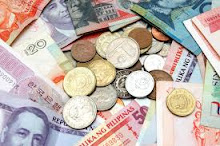
That the Canadian buck is rapidly approaching par with the American one, and may soon be worth more, is a new experience for many, and a bit of a shock for those who recall just a few years ago when one Canadian dollar fetched less than 70 cents US.

For those with long enough memories, however, it's not new. In the late 1960s, the Canadian dollar was worth more than its American counterpart.

But does that represent a bit of nostalgia -- or an unpleasant flashback?

That question leads to a much larger issue: Whether a "strong" currency is preferable to a "weak" currency. The answer to that question, to return to our avian metaphor, may depend on which end of the binoculars you're gazing through -- and what you're staring at.

If you're a traveller, for example, your opinion on the news depends on which direction you're headed. Americans accustomed to enjoying an exchange rate-enhanced weekend getaway in Vancouver, B.C., have found their bargains swept away by the shift in values.

That ought to mean, conversely, that more Canadians will be venturing south for shopping and tourism, which in turn ought to be great news for markets such as Bellingham and Whatcom County.

A Canadian dollar at or near par "will do something," but maybe not as much as people would expect, cautions Hart Hodges, director of the Center for Economics and Business Research at Western Washington University.

For evidence, Hodges points to a graph on the centre's website that plots southbound border crossings in Whatcom County versus the exchange rate. From about early 2003, the Canadian dollar has been steadily climbing in value against the American dollar. Yet border crossings have been essentially flat over that period.

How come? "The retail stores people used to come down for are now up there," Hodges says. And the retail sector in Vancouver "is not going to watch all that money go south" without trying to keep it home with sales and other enticements.

"We're going to get some [gain]," he adds, but the old rule of thumb that every penny rise in the Canadian dollar neatly translates into some specific gain in Canadian visitors seems to have gone away.

Another big sector that could be affected is energy. Americans buy a lot of their energy from Canada, in the form of natural gas, electricity and oil. A more expensive Canadian dollar means more expensive energy for American buyers.

But here again, the effect isn't as obvious as might first appear. Puget Energy spokesman Roger Thompson says that the utility's natural gas contracts, for example, are denominated in U.S. dollars. Should a Canadian company decide to raise the price to reflect the difference in exchange rates, suppliers from other regions such as the Rocky Mountains might offer natural gas at a price that undercuts that competing bid.
"The market will step in and find equilibrium," he says.

And that gets us back to the question of why we would want a strong currency anyway, outside of the grumbling of a few tourists whose lunch in Vancouver just got more expensive.

One reason for a strong currency is for the stuff we buy beyond our borders -- big-screen TVs, laptop computers, clothing, cars, oil. A weak dollar makes those imports more expensive. On the other hand, a weak currency may reflect the rest of the world's view of growth prospects, but it also presents an opportunity for job creation through export growth.

That sort of inconclusive conclusion is what infuriates people about economics. Nevertheless, whether the Canadian dollar's gains against the U.S. version is good news depends on personal perspective.

To some of you, those larger flocks of loons on stronger Canadian dollars may be as attractive as turkey vultures.

Others, however, will say the resemblance is much closer to bluebirds of happiness.

http://www.canada.com/vancouversun/news/editorial/story.html?id=c0395bb2-7944-4a4e-a189-4820752677d9

Dell Canada Inc

Thursday, May 31, 2007

Brokeback phenomenon

Call it the Brokeback phenomenon. Not only did last year's Oscar nominee for Best Picture catapult Heath Ledger and Jake Gyllenhaal to superstardom, it thrust Alberta onto the stage as a scenic must-see for travellers. But not just any wayfarers.

If the characters played by Heath and Jake could find love in the Rocky Mountains, surely gays and lesbians from around the world would have similar luck -- or, at the very least, a fabulous holiday.

Yes, San Francisco, there's a new destination on the gay and lesbian travel radar. Though Cowtown hotels and attractions aren't yet flying rainbow-striped flags, it's fair to say the city is flaunting more colours than just red (necks).

Tourism Calgary and many of its partners are embracing this growing travel niche.

"It's an absolutely massive potential market," says Paul Newmarch, media marketing co-ordinator for Tourism Calgary. "That whole Brokeback Mountain thing, that really opened the door for us."

Gay and lesbian travellers began expressing interest in coming to see where the movie was filmed. They also started asking the question: "Is Calgary gay-friendly?"

The city couldn't afford to say, "No."

According to research by Mintel International Group, the gay holiday market was worth $1.55-billion in 2006, with 1.25 million holidays taken by gay travellers.

Canada is poised to rake in a good chunk of that change -- the country was ranked No. 1 as the world's best travel destination for gays and lesbians (in part because of its stance on gay marriage), according a survey by Community Marketing Inc., a company that tracks the spending habits of American gays and lesbians.

Still, Calgary has a long way to go before its name rolls off gay travellers' tongues as easily as, say, Puerto Vallarta.

In the summer 2007 issue of American magazine The Out Traveler, Vancouver, Edmonton, Winnipeg, Toronto and Montreal are named Canada's top five gay-friendly tourist destinations. Calgary isn't mentioned.

Tourism Calgary would like to change that. The organization is working with a number of gay media outlets as well as local gay-friendly restaurants and hotels, to get the word out.

Newmarch says some hotels are engaging in "sensitivity training" so staff won't even blink when a homosexual couple arrives to check in.

"We are definitely promoting Calgary as a gay (friendly) destination ... but the challenge for us is that some of our partners aren't necessarily gay-friendly-ready," he says.

One that is ready is Hotel Arts, a boutique hotel located in Calgary's Beltline, not too far from Twisted Element, the city's largest gay nightclub.

The five Fairmont hotel properties in Alberta are also officially gay-friendly.

Such accommodations are helping boost Calgary's cachet among gay and lesbian travellers, says Steve Polyak, a native Calgarian and co-owner of GayCalgary.com and GayCalgary magazine. But not everyone is welcoming same-sex couples with open arms.

Even though such attitudes persist, Polyak is positive about Calgary and talks excitedly about all it has to offer. Beyond the restaurants, nightclubs and proximity to those Brokeback mountains, the city hosts a 10-day Pride Festival and the Gay Rodeo in June. Travellers who come for the Gay Rodeo often stay in town for the Stampede, he says.

But Polyak says it's not a good idea at the Stampede Grounds to hold hands or smooch your same-sex partner.

"Calgary is still very much a conservative city. We cannot forget that."

Source ref: http://www.canada.com/vancouversun/news/travel/story.html?id=0870a7c0-42ec-4cbd-9cb8-4c1da04d7095&k=63557

Governor Arnold Schwarzenegger salutes the wines of California at Vancouver's Largest Liquor Store

BURLINGTON, ON, May 31 /CNW/ - Vancouver's 39th and Cambie liquor store
was abuzz with celebrity today as California Governor Arnold Schwarzenegger
joined Joseph Rollo, International Director of the Wine Institute of
California, to toast the wines of California being showcased in a special
consumer promotion running May 27th-June 23rd. Wine lovers throughout British
Columbia will have an opportunity to experience California sunshine in the
glass at 50 stores across the province.
Governor Schwarzenegger, in Vancouver on a special trade mission, met
with Rollo and BCLDB officials to raise a glass to the special, in-store
promotion that will heighten the profile of the Golden State and drive
additional interest and growth in the California wine category.
Rollo said, "We are thrilled to have Governor Schwarzenegger support and
celebrate the announcement of June's promotion. He is passionate about all
things California, and in particular our wines. The Governor recognizes the
contributions of California's vintners and winegrape growers as a unique and
special part of California and we are grateful for his presence here in
British Columbia."
The BCLDB is working closely with the Wine Institute of California on
this promotion that will be held in 50 of the BCLDB's biggest stores including
20 of their Signature Stores that will feature a number of new releases
specially selected by the LDB. The "Taste California" promotion highlights
20 popular California wine brands and will bring to life the vitality,
sunshine and lifestyle that has made the Golden State so famous.
Each participating store will display colourful point-of-sale materials
and freestanding displays. In addition to store displays and advertising in
key publications, supplementary activities will be coordinated by
participating agents consisting of in-store tastings and licensee promotions.
To further round out the promotion, the Wine Institute of California is
staging a dynamic California Dreamin' food & wine event at the 39th & Cambie
store on June 2.
California wine sales are on the upswing and the category is enjoying a
tremendous resurgence in the British Columbia market. Wine sales for the
California category for the past fiscal year were up 13.4% in dollars to
$72.5 million with red wine sales up +16.7% and white wine sales up +11%. More
than 1,656 California wines are available in the B.C. market.
"Our marketing activities in the British Columbia market have been key
components in driving interest in the California category and we believe that
our efforts, especially over the past few years, are now paying off," said
Rick Slomka, Canadian Director of the Wine Institute of California. "The
stronger dollar, new, exciting products, and a terrific selection of well
priced premium wines are all contributing factors to the renewed energy in the
California wine industry."
The Wine Institute of California, established in 1934 is a trade
association of 1,000 California wineries and affiliated businesses dedicated
to initiating and advocating public policy to enhance the environment for the
responsible consumption and enjoyment of wine. Based in San Francisco, the
Institute has also established promotional campaigns in 20 countries around
the world to further global recognition of the California wine industry, which
holds the title of world's fourth largest wine producer.
The Canadian office coordinates a number of promotional activities every
year designed to educate and inform media, trade and consumers about the
quality and diversity of products available from the Golden State. For more
information on the Wine Institute of California, visit the Web site at
www.wineinstitute.org or www.calwine.ca


<<
A California Wine Primer

Everything you need to know about liquid sunshine in the glass

- California is America's top wine producer, making 90% of all U.S.
wine

- California is the fourth leading wine producer in the world behind
the countries of France, Italy and Spain

- California's wineries are predominantly family owned and
multi-generational

- Attracts 19.7 million tourists annually to all regions in California

- Generates wine-related tourism expenditures of $2 billion in
California

- Produces $51.8 billion in economic value for California

- Generates $125.3 billion for the U.S. economy

- Creates 309,000 jobs in California and a total 875,000 jobs
nationwide

-------------------------------------------------------------------------
(based on 2005 data)
California Wine Industry Profile MKF Research LLC and Wine Institute
-------------------------------------------------------------------------
Number of Bonded Wineries 2275 Nearly all family owned
-------------------------------------------------------------------------
Number of California Grape Growers 4,600
-------------------------------------------------------------------------
U.S. Wine Exports (95% from $672 million winery revenues
California) up 391% from $137 million in 1990;

43 million (cases to 165 countries)
up 258% from 12 million cases in
1990
-------------------------------------------------------------------------
Winegrape Acres 522,000 (Though vineyards cover less
than 1% of the state's terrain)
-------------------------------------------------------------------------
Average Tons Harvested of
Winegrapes 3.1 million
-------------------------------------------------------------------------
Farm Gate Value of Winegrapes $1.78 billion
-------------------------------------------------------------------------
>>


California Wine Facts & Figures
Wine knowledge to amuse and peruse

Good news for the waistline!

Wine is fat free and contains no cholesterol. A 4-ounce glass of table
wine has about 80-100 calories.

Just how many grapes are in that bottle of wine?

It takes about six to eight clusters, or approximately 600 to 800 wine
grapes (2.4 lbs), to make a bottle of wine.
One barrel of wine contains 740 lbs of grapes, equivalent to 59 gallons
or 24.6 cases of wine.

And how many bubbles in a bottle of bubbly?

It is theorized there are approximately 44 million bubbles in a bottle of
sparkling wine/champagne.

What's on top in 2006?

Chardonnay, with 95,000 acres, is the wine type variety with the most
acreage planted in California.
Cabernet Sauvignon was the second most planted winegrape in California
with 77,000 total acres.
Chardonnay remained the leading varietal wine, followed by Merlot, White
Zinfandel and Cabernet Sauvignon. Together these four varietals made up over
half (53 percent) of the wine sales in retail stores.

Variety is the spice of life in the Golden State

Wine-type grapes are grown in 46 of California's 58 counties, covering
527,000 acres in 2006.
There are more than 107 American Viticultural Areas (AVAs) in California
(distinct winegrape growing areas recognized by the U.S. government), a
testament to the variety of microclimates in the state.
California wines have benefited from the unique and varied mix of
cultures that found new homes in the Golden State, from Spanish missionaries
who established the state's first vineyards and wineries beginning in 1769, to
the German, Italian and other European immigrants who founded California's
pioneer wineries, and to the farmers, researchers and entrepreneurs who helped
create the modern California wine industry.
The highest vineyard in California is the Shadow Mountain Cabernet
Sauvignon vineyard located at an elevation of 4,400 feet above sea level in
the mountains of San Diego.
California's 2,000 bricks and mortar commercial wineries are
predominantly family-owned and operated.
There are more than 60,000 registered California wine labels.

Sustainable wine practices take root

The trend in sustainable winegrowing and winemaking practices is growing
quickly in California. Vintners and growers who represent 53 percent of the
annual wine case production and one quarter (172,000 acres) of the state's
wine acreage currently participate in the Code of Sustainable Wine Growing
Practices program.

California wine is good for the bottom line

California wines accounted for 63 percent of the total 716 million
gallons - both foreign and domestic - consumed in the U.S. in 2006, or roughly
two out of every three bottles sold in the country.
California winery shipments comprised roughly $17.8 billion of the
$27.8 billion estimated retail value of all wine sold in the U.S. in 2006.
Wine is California's most valuable finished agricultural product. The
overall economic impact of the wine industry on the economy of California
exceeds $51.8 billion.
The expansion of exports of California wine over the last decade has
dramatically increased from $196 million in 1994 to $876 million in 2006.

Second only to Disneyland

Wineries and vineyards are the second most popular tourist destination in
California after Disneyland. A total of 19.6 million tourists visit the
state's wine regions each year.

/NOTE TO PHOTO EDITORS: A photo accompanying this release is available on
the CNW Photo Network and archived at http://photos.newswire.ca.
Additional archived images are also available on the CNW Photo Archive
website at http://photos.newswire.ca. Images are free to accredited
members of the media/


For further information: Paula Oreskovich, Praxis PR, (905) 949-8255 ext
223, paula@praxispr.ca

Source ref: http://www.newswire.ca/en/releases/archive/May2007/31/c7643.html

The biggest empty ballroom in town

VANCOUVER/CKNW - More questions about the Vancouver Convention Centre project in the legislature today, after a tourism official predicted it will become the biggest empty ballroom in Vancouver.
NDP leader Carole James seized on comments by Fairmont Hotels Vice-President Phil Barnes that not enough has been done to book future conventions into a centre that will cost taxpayers at least $800 million.

"The biggest empty ballroom in town end quote....to the minister of tourism sports and the arts, just how many millions is he willing to waste on an empty ballroom?"

But Tourism Minister Stan Hagen denies the charge.

"We are on track for bookings on conferences right out to 2016."

But Hagen still can't give a final price tag for the project that was supposed to come in at $495 million.

Source ref: http://www.cknw.com/news/news_local.cfm?cat=7428109912&rem=66692&red=80110923aPBIny&wids=410&gi=1&gm=news_local.cfm

Convention centre faces lacklustre bookings: hotel exec

The $800-million-plus Vancouver convention centre expansion will become "the biggest empty ballroom in town" unless it is able to attract more business opportunities soon, Fairmont Hotels & Resorts regional vice-president Phil Barnes warned on Wednesday.

The amount of business booked for the new centre after the 2010 Olympics simply isn't good enough, he said in an interview after Tourism Vancouver's annual general meeting.

"What we have on the books for conventions is absolutely critical, and nobody seems to be focused on that," Barnes said. "That convention centre will be the biggest empty ballroom in town in the years ahead, unless somebody wakes up and does something about it now."

The convention centre project -- originally priced at $495 million -- will triple the amount of meeting space at the Canada Place facility when it opens in early 2009. It will be used as the international broadcast centre for the 2010 Olympic Games.

Outgoing Tourism Vancouver chairman Jim Storie told the meeting the new convention centre currently has projected occupancy rates of just 38 per cent for 2011, 28 per cent in 2012, and three per cent in 2013.

He said officials need to book 80 to 90 new future conventions by the end of 2009 to ensure respectable occupancy levels for the 2010-to-2015 period.

Barnes, who soon leaves Vancouver to take up a new Fairmont Hotels posting in Dubai, said he's extremely concerned about the situation.

"If I was staying here, I would be scared silly," he said. "I see a huge black cloud on the horizon in terms of future convention bookings, but we have a window now to do something about it."

Barnes said Tourism Vancouver should have the sole responsibility for booking conventions into the centre -- something that's currently shared between Tourism Vancouver and the Vancouver Convention & Exhibition Centre.

"Give them targets and hold them accountable, because I don't know who's accountable for it today," he said.

Tourism Vancouver president Rick Antonson said his organization needs more funding to do a better job of selling Vancouver as a convention destination.

"We need to knock on more doors," he said. "There are hundreds of associations and corporate events that need to know about Vancouver, but we can't deliver bids to them because we don't have the resources."

Antonson said Tourism Vancouver could use another convention salesperson in Chicago, one or two more in Washington, D.C., one in Texas, and another in Europe.

Tourism Vancouver currently operates with a $12-million annual budget, compared with $28 million in Montreal, and $30 million in Toronto.

bconstantineau@png.canwest.com

Source ref: http://www.canada.com/vancouversun/news/business/story.html?id=ebba8d07-c76c-4204-827a-30b3a5f73482

Sunday, May 27, 2007

High gas prices won't necessarily dampen summer leisure travel

WASHINGTON (AP) - Travel industry experts say high gas prices won't necessarily dampen leisure travel this summer.

The latest forecast from the Travel Industry Association predicts leisure travel to increase 1.4 per cent over last summer, with 330 million Americans expected to travel 50 miles or more one-way, away from home, this June, July and August. Business and convention travel will remain strong as well, increasing about 3 per cent this summer, TIA said.

But while Americans will be hitting the road, Suzanne Cook, senior vice president of research for the association, said they may curb their spending in other ways to compensate for the bite that gas takes out of their budgets.

"Some people will shorten the trip in terms of nights they spent away from home or distance travelled," Cook said in a telephone conference call about the TIA study. "They'll do things like find a more modest form of food, cut back on restaurant purchases, downscale on their hotels. We've aready been seeing some trading down in the hotel sector."

AAA reached a similar conclusion in its Memorial Day travel forecast. AAA Travel Vice President Sandra Hughes said in a statement that "families will travel closer to home, they will travel for fewer days and will save money by staying in less expensive hotels and eating in cheaper restaurants, but they will continue to take vacations and plan getaways."

While automobile travel will account for eight in 10 summer leisure trips, TIA predicts that air travel will rise about three per cent this summer.

"Airlines are going to be crowded this summer," said TIA spokeswoman Cathy Keefe. "We have to hope there are going to be no long disturbing weather patterns" of the sort that could cause major delays in air traffic.

The TIA survey of 2,000 people in late April and early May found that 80 per cent of those planning leisure trips will be visiting friends and relatives.

Nearly as many are also looking to engage in sightseeing. Top activities include going to the beach, visiting a national park, visiting a mountain area, visiting a state park, visiting a city, going to all-inclusive resorts, taking a cruise or visiting a theme park.

About 40 per cent of those surveyed expressed interest in historic or heritage-focused activities or in fine dining or culinary or wine-related activities. Nearly as many want to take trips focused on arts or cultural activities, spas or gambling. Fourteen per cent plan to take golf trips.

Source ref: http://www.canada.com/theprovince/news/travel/story.html?id=ce795a4b-2709-4825-a4c7-e1369bf507ad&k=81332


TASHI, Taiwan (AP) - Transplanted statues of Chiang Kai-shek have been neatly spread along a verdant hillside in northern Taiwan, some showing him on horseback with his mustachioed face held high, others with him clutching a ceremonial sword or reading a classical text.

Chiang is much out of favour on the island of 23 million people, his 25 years of dictatorial rule regarded by many as justification for the relocation of his once ubiquitous bronze images to an isolated site in Tashi, an hour's drive from the capital Taipei.

But in an ironic twist, they have now become a place of pilgrimage for tourists from mainland China - the country Chiang fled in shame in 1949 after his Nationalist forces were defeated by Mao Zedong's Communist Party in a bloody civil war.

Chiang is a contentious figure on both sides of the Taiwan Strait - though for very different reasons.

In Taiwan he is reviled by the ruling Democratic Progressive Party. Many of the DPP founders suffered imprisonment and worse under 39 years of martial law that began in 1948.

Even many younger members of Chiang's Nationalist Party, eager advocates of the democratic system that Taiwan now embraces, freely acknowledge the excesses of his regime.

But in mainland China he is seen as an avatar of the unification that has long stood at the forefront of Beijing's Taiwan policy - so much so that his ruthless pursuit of the Communist enemy during 23 years of on-again-off-again civil war has been conveniently shunted aside.

In the quiet hillside park in Tashi, some 120 Chiang statues dumped by schools, public parks and once reverential communities attract a constant stream of mainland tourists, now permitted to visit Taiwan despite lingering hostilities between the sides.

A local official says the park, and the sombre Chiang mausoleum which it abuts, appear to appeal to mainland visitors far more than the island's loudly trumpeted scenic lakes and mountains.

"Whether they respect or dislike Chiang, they see the man as a symbol of Taiwan's ties to the mainland," said Chang Ching-wan, of the Tashi town government. "We were surprised to see some of the mainlanders bowing before Chiang's coffin."

Last year, nearly 40,000 Chinese visited Taiwan, and Taiwanese authorities are hoping for a tenfold increase in the number of tourists from China after a deal is struck with Beijing on travel arrangements - a development that could easily turn the trickle of mainland visitors to Tashi into a flood.

On a recent weekday morning, a group of tourists from northeastern China's Liaoning province carefully inspected an oversized bronze statue showing a smiling Chiang in a traditional Chinese gown seated comfortably on a large chair.

The tourists - men in dark business suits and women with permed hair and bright jackets - appeared subdued as they posed quietly for photos with their digital cameras.

"We came here to get a touch of history," said a mainlander who identified himself only by his surname Zheng.

"Chiang was a man of a bygone age and my impression of him is neither good nor bad," he added.

Those sentiments are a far cry from the widespread Communist condemnations in the days following Chiang's ignominious retreat to Taiwan in 1949. Contemporary writings depicted him as a "bandit" and accompanying Nationalist troops as looters and thieves.

After retreating to Taiwan, Chiang built the island into an anti-communist bastion dedicated to re-conquering the mainland. That goal was pushed aside only in the early 1990s, and over the past seven years - since President Chen Shui-bian's DPP ended 50 years of Nationalist rule - the independence-leaning government has constantly attacked Chiang's legacy.

Recent DPP moves include removing hundreds of Chiang statues from military bases and erasing Chiang's name from Taiwan's main international airport.

Last month party leaders said they wanted to reconsecrate the mammoth Chiang Kai-shek Memorial Hall in downtown Taipei, changing it into a monument to democracy.

The move provoked outrage from many nationalist officials, who revere the white, palace-like structure as one of the few examples of classic Chinese architecture in Taiwan's otherwise gritty capital.

Nationalist legislator Joanna Lei derided it as a cheap political ploy intended to curry favour among the DPP's core supporters ahead of legislative elections later this year and the presidential poll in March 2008.

"The DPP is mounting psychological warfare against a pseudo-target - all those who support the opposition - trying to blame them for past injustices," she said.

Communal politics often come to the fore during major Taiwanese elections.

In the coming presidential race, DPP candidate Frank Hsieh is set to face the Nationalists' Ma Ying-jeou, a Harvard-educated lawyer whose parents were among the two million people who followed Chiang to Taiwan in 1949.

Many of the families of these later immigrants support the Nationalists and their platform of eventual unification with the mainland.

But the majority of Taiwanese are descendants of Chinese immigrants from the 17th and 18th centuries. They form the DPP's core constituents and remain opposed to unification, without necessarily favouring formal independence.

Source ref: http://www.canada.com/theprovince/news/travel/story.html?id=bb54231b-77d3-4bfe-bba8-ca179e775236&k=98609&p=2


Open an eBay Store!