Monday, June 11, 2007

Tourism target may be hard to hit

Fears are growing deep within the heart of one of B.C.'s traditionally most optimistic industries.

Representatives of the tourism sector say they are in the fight of their lives to meet the challenge thrown at them earlier this year by Premier Gordon Campbell to double annual tourism revenues to $18 billion by 2015.

"It is going to be one hell of a stretch," concedes Phil Barnes, regional vice-president of Fairmont Hotels & Resorts.

"You have to remember that rival destinations out there are trying to steal our business."

Barnes says that while reaching Campbell's goal isn't impossible, it will take a monumental joint effort from everyone in the industry -- and a whole lot more cash.

"We have to realize that we cannot be all things to all people and must concentrate on the regions that will bring us the highest yields, while not forgetting the rest of the world," he says.

Tourism Vancouver boss Rick Antonson acknowledges the industry is tiptoeing along a tight line and anticipates there will be some post-2010 Winter Olympics fallout.

To this end, Tourism Vancouver has departed from past practice and produced a new strategic plan and direction from 2008 out to 2015.

The plan, released late last week, boldly states that "by 2015, Vancouver will surpass the previously forecasted $5.8 billion in incremental tourism revenue." It is now worth about $4.4 billion annually.

Somewhat less boldly, the plan also acknowledges that between next year and 2015 Vancouver will need to attract a higher-yield customer base driven by convention and long-haul leisure business.

And this, Antonson readily acknowledges, is where it gets tricky.

To do this will require a 17-per-cent increase in total spending by Canadian tourists, 20-per-cent growth from the highly lucrative U.S. market and a 59-per-cent jump in the international market.

Breaking it down further, the numbers are equally challenging.

Hitting Campbell's target will require 52-per-cent growth in convention business, 26 per cent in long-haul leisure revenue, 23-per-cent growth in corporate business, a 14-per-cent jump in independent revenue and seven-per-cent growth in short-haul leisure business.

The U.S. market is causing the most worries as it is already in a downward mode, primarily because of terrorism/border concerns and a fear by Americans of travelling outside their borders.

Throw in the unexpected stratospheric rise of the Canadian dollar and the problems multiply.

And then there is the newly expanding convention centre.

Putting aside the enormous cost overruns, now heading toward the $900-million mark from the original budgeted $495 million, there are real concerns about bookings post-2010.

The convention centre is a linchpin to Tourism Vancouver's long-term strategy, and the current numbers are not exactly robust, although it is early days.

Former Tourism Vancouver chairman Jim Storie told the organization's annual meeting last week that the centre has occupancy rates of 38 per cent for 2011, 28 per cent for 2012 and three per cent in 2013.

Just to get to a respectable level from 2010 to 2015 would take the booking of 70 to 80 new conventions by the end of 2009.

Conventions are a huge earner for the city and in 2006 contributed more than $1 billion to the Greater Vancouver economy.

A further critical need is for the sales and marketing structure of the convention centre to be made accountable to the industry for performance, says Antonson.

Currently, responsibility is shared between Tourism Vancouver and the Vancouver Convention & Exhibition Centre, but that must change, Antonson says.

While remaining confident "the centre will be worth every penny that is spent," he acknowledges that competition from other cities will be tough, even though Vancouver has been named the top destination for international meetings by the International Congress and Convention Association.

Antonson and Vancouver International Airport officials are jetting off to Manchester, England, this week to pitch for an International Routes conference in 2010. This is the group that decides where airlines fly, so it is big, he says.

Even bigger prey is the Alcoholics Anonymous convention, held every five years. Antonson says they are pitching for the 2020 conference, which is the biggest in the world and attracts 65,000 delegates. The decision on a venue will be made next year.

Other critical factors include significant incremental revenues from provincial sources, more hotel rooms and full implementation of the long-promised "open skies" air policy.

The Conservative government continues to sit on its undercarriage despite extolling the virtues and promising "open skies" would be more than a mirage.

Antonson remains confident about the future, even predicting that tourism will ultimately rival forestry as B.C.'s largest industry. But he says his group's current budget of $12 million is chump change when compared with Montreal's, $28 million, and Toronto's, $30 million.

It's simply not enough to get the job done, he says. Ideally, he would love to put more salespeople into Chicago, Texas, Washington and Europe.

Barbara Maple, president of the Vancouver Convention & Exhibition Centre, says there is absolutely no reason for panic.

"We are exactly on track of where we should be in this booking cycle," she says. "We have 54 events booked post-2009, and 29 of them would not have come here without the new convention centre because they need that space."

http://www.canada.com/theprovince/news/money/story.html?id=2345f909-9a55-4521-9579-8cd4815b4709&k=6445

468x60 ENG Banner

Is it loonie to visit Canada this summer? Not with these tips

With the Canadian dollar at its strongest against the U.S. dollar in 30 years, a weekend in Victoria or Vancouver, B.C., will cost you almost 7 percent more than it did last year, and that's not counting any changes in prices.

If the surge keeps up, the Canadian dollar, now worth 94 cents compared with an average 88 cents last year, could be worth as much as $1 U.S. by the end of the year, wiping out the discount that has made Canada an attractive travel destination for Americans.

"We're not the bargain we used to be for Americans," says Mara Jernigan, operator of Fairburn Farm, a culinary retreat and guesthouse in Vancouver Island's Cowichan Valley. Like many Canadian resorts and hotel operators, she didn't raise her rates this year, yet a room priced at $160 Canadian now costs $150.40 in U.S. dollars compared with $141 last year.

The U.S. dollar has weakened against almost all the world's currencies, but the effects have been particularly noticeable in Canada over the past several years due to its higher interest rates and strong economy.

In 2003, when the Canadian dollar, known as the loonie because of the loon pictured on the $1 coin, was worth just 72 cents, a hotel room priced at $160 CAN would have cost just $115 U.S.

"It's extremely challenging for smaller businesses," said Jernigan, who counts on American visitors for 50 percent to 60 percent of her business in the summer season.

The number of U.S. visitors to British Columbia dropped 8.7 percent through March of this year compared with last. Making travel more costly was the federal government's recent decision to eliminate the rebate on a 6 percent (GST) tax on lodging and other goods and services. Tourism officials fear that the strong loonie coupled with a U.S. plan to require passports or new identity cards at land border crossings as early as next January could add to what's been a 34 percent drop in U.S. travelers to Canada since 2000.

What should you do if you've got your heart set on taking the family or visitors to Vancouver or Victoria this summer?

While no longer cheap, a British Columbia getaway can still be affordable, but you'll have to work to make your dollars stretch.

Shop for hotels

Not many bargains this time of year, but it still pays to shop around.

Most hotels don't include taxes in their initial rate quotes, so be sure you're getting the bottom-line price. In Vancouver and Victoria, taxes add another $16 per night onto the price of a $100 room.

• Check the "Escape Rates" offered by Tourism BC at www.hellobc.com.

A search for a discounted rate for a Friday-night stay in Vancouver in June indicated nothing was available at several hotels listed. It paid to keep trying. More searching on the site brought up an "Escape rate" of $172 CAN ($161.70 U.S.) with taxes for a standard queen room at the Comfort Inn on Nelson Street in the heart of downtown. This beat Expedia's rate of $256 U.S. and $278.38 CAN ($262 U.S.) quoted on the hotel's Web site. Calling the hotel and asking for an AAA discount yielded a rate of $208 U.S. with taxes.

• Consider budget hotels, but make sure you're familiar with the location, and find out what other travelers have to say before booking.

The James Bay Inn (www.jamesbayinn.bc.ca), a good budget choice for families in a residential neighborhood a few blocks from the harbor in Victoria, wins high marks on www.tripadvisor.com. Doubles in July go for as low as $118 U.S., including taxes, a 15 percent restaurant discount and free parking.

The Patricia Inn (www.budgetpathotel.bc.ca), a budget inn on East Hastings Street in downtown Vancouver, has doubles this summer for $100 U.S., including taxes and breakfast, but the hotel gets low marks on tripadvisor, mostly due to its location in an area populated with drug dealers and crack addicts.

• Check out packages that combine transportation or activities with hotel stays.

Clipper Navigation, which operates the Victoria Clipper high-speed passenger ferry between Seattle and Victoria, offers overnight packages starting at $110 U.S. per person including taxes, and one child under 12 per paying adult goes free. See www.clippervacations.com.Tourism Victoria (www.tourismvictoria.com) sometimes bundles getaways keyed to events.

Avoid weekend travel

Not only will you wait less crossing the border, you might snag midweek discounts on hotels and transportation.

One example: A round-trip ticket for travel between Seattle and Victoria on the Victoria Clipper Monday-Thursday is $113 (including a $12 fuel surcharge) through the end of June with a one-day advance purchase, a price available on weekends only if you buy the tickets two weeks ahead.

Use public transportation

Leave the car at home and avoid high gas prices and hotel parking fees.

Take Amtrak (www.amtrak.com) to Vancouver. One-way fares are as little as $28 if booked far enough in advance (the fewer seats available, the higher the fares). Trains leave Seattle in the morning, arrive in time for lunch and depart each evening at 6 p.m.

Get around town with a day pass ($7.50 U.S.) for the SkyTrain light-rail system (which has a stop right across the street from the train station), buses and the SeaBus to Lonsdale Quay and Vancouver's north shore. See www.translink.bc.ca.

Starting June 17 through late September, there's free shuttle service around Stanley Park from 10 a.m.-6:30 p.m. The natural-gas-powered buses stop at 15 locations. See www.city.vancouver.bc.ca.

Head to Whistler

The best defense against higher prices is to travel off-season. October through April is generally the best time to find deals, but seasonal bargains right now are in Whistler, B.C.'s premier ski resort.

Hundreds of luxury hotel rooms go begging in summer, and there are plenty of warm-weather activities such as glacier skiing and hiking, mountain biking, golfing, rock climbing or just relaxing by one of the pools.

Book a two-night summer stay by Thursday and many of the hotels are offering a third night at 50 percent off. You can stay three nights in July at the European-style Alpenglow Lodge for $312 U.S., taxes included, compared with $284 for one night in February. The one-bedroom unit comes with gas fireplace and a kitchen.

Last-minute deals are available two or three weeks out. You choose the room type, star rating and price and learn the name of the resort once you pay with your credit card. Example: Available for the Father's Day weekend was a rate of $118 U.S., taxes included, for a studio in a five-star Whistler Village resort with pool, hot tub and spa. See www.whistlerblackcomb.com.

Special promotions

Tourism Vancouver will be offering two-for-one coupons, 15 percent discounts and family packages during its "100 Days of Summer" campaign starting June 21. Check www.tourismvancouver.com.

Vancouver is a great restaurant city. The winter dining-out promotions have ended, but you can still find some bargains. The Fairmont Hotel Vancouver offers free tapas during happy hour from 5-6 p.m. weeknights. Arrive before 6 p.m. at West, 81 Granville St., and sample chef David Hawksworth's cooking at the early-bird prix fix of $42 U.S. per person for three courses. See Vancouver Courier reviewer Tim Pawsey's suggestions at www.vancourier.com.

Exchange fees

You might not think of Canada as a foreign country, but banks do, which means extra fees are applied to ATM withdrawals and credit-card charges.

Check with your bank on its foreign transaction fees — usually 1 percent on ATM transactions (some banks charge an additional withdrawal fee) and from 1 to 3 percent on credit-card charges. Larger banks tend to charge higher fees than credit unions and small banks.

Carol Pucci: 206-464-3701 or cpucci@seattletimes.com

Canada road-border crossings may be more congested than ever this summer with higher security and more Canadians coming to the United States in search of bargains.

Proof of citizenship or legal residency, such as a birth certificate (with photo ID such as a driver's license), passport or Green Card, is required when going to and from Canada by car, bus, train or boat. Passports are required for air travel.

http://seattletimes.nwsource.com/html/travel/2003738165_canada10.html

468x60 French Banner

Bridge Studios sold to Larco

The B.C. government has sold Bridge Studios in Vancouver for $40 million to Larco Investments Ltd.

The B.C. Pavilion Corp. (PavCo) has operated the movie studio since it was built in 1989.

At that time, the B.C. film industry was in its infancy. It has since grown to be worth $1.2 billion in 2006. Along with that growth has come a huge increase in the number of studios.
Given the increase in available studio space, Pav-Co's chief operating officer, John Harding, said it made sense to sell the Bridge facilities.

"It isn't really in the government's interest to be in the business," Harding said.

"Private industry is best equipped to maintain and operate production facilities of the level and expertise of Bridge Studios," Tourism, Sports and the Arts Minister Stan Hagen said in a prepared release.

Larco will continue to operate the six sound stages and special-effects stage as film studios, Harding said.

Bridge Studios' five full-time employees will keep their jobs, he added.

mramsey@png.canwest.com

http://www.canada.com/theprovince/news/story.html?id=57e53042-e0c0-450e-aa69-069a32eb7ef4

88x31 French banner

Stronger dollar mixed blessing south of the border, too

SEATTLE - Monetary ornithologists are scanning the skies for signs that a certain species is visiting these parts in ever-larger flocks: The loon on the Canadian dollar.

At the same time, they're seeing indications that another species of currency -- the Yankee greenback -- doesn't seem to fly as far or as high as it once did.

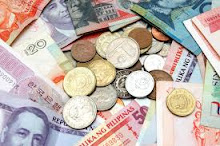
That the Canadian buck is rapidly approaching par with the American one, and may soon be worth more, is a new experience for many, and a bit of a shock for those who recall just a few years ago when one Canadian dollar fetched less than 70 cents US.

For those with long enough memories, however, it's not new. In the late 1960s, the Canadian dollar was worth more than its American counterpart.

But does that represent a bit of nostalgia -- or an unpleasant flashback?

That question leads to a much larger issue: Whether a "strong" currency is preferable to a "weak" currency. The answer to that question, to return to our avian metaphor, may depend on which end of the binoculars you're gazing through -- and what you're staring at.

If you're a traveller, for example, your opinion on the news depends on which direction you're headed. Americans accustomed to enjoying an exchange rate-enhanced weekend getaway in Vancouver, B.C., have found their bargains swept away by the shift in values.

That ought to mean, conversely, that more Canadians will be venturing south for shopping and tourism, which in turn ought to be great news for markets such as Bellingham and Whatcom County.

A Canadian dollar at or near par "will do something," but maybe not as much as people would expect, cautions Hart Hodges, director of the Center for Economics and Business Research at Western Washington University.

For evidence, Hodges points to a graph on the centre's website that plots southbound border crossings in Whatcom County versus the exchange rate. From about early 2003, the Canadian dollar has been steadily climbing in value against the American dollar. Yet border crossings have been essentially flat over that period.

How come? "The retail stores people used to come down for are now up there," Hodges says. And the retail sector in Vancouver "is not going to watch all that money go south" without trying to keep it home with sales and other enticements.

"We're going to get some [gain]," he adds, but the old rule of thumb that every penny rise in the Canadian dollar neatly translates into some specific gain in Canadian visitors seems to have gone away.

Another big sector that could be affected is energy. Americans buy a lot of their energy from Canada, in the form of natural gas, electricity and oil. A more expensive Canadian dollar means more expensive energy for American buyers.

But here again, the effect isn't as obvious as might first appear. Puget Energy spokesman Roger Thompson says that the utility's natural gas contracts, for example, are denominated in U.S. dollars. Should a Canadian company decide to raise the price to reflect the difference in exchange rates, suppliers from other regions such as the Rocky Mountains might offer natural gas at a price that undercuts that competing bid.
"The market will step in and find equilibrium," he says.

And that gets us back to the question of why we would want a strong currency anyway, outside of the grumbling of a few tourists whose lunch in Vancouver just got more expensive.

One reason for a strong currency is for the stuff we buy beyond our borders -- big-screen TVs, laptop computers, clothing, cars, oil. A weak dollar makes those imports more expensive. On the other hand, a weak currency may reflect the rest of the world's view of growth prospects, but it also presents an opportunity for job creation through export growth.

That sort of inconclusive conclusion is what infuriates people about economics. Nevertheless, whether the Canadian dollar's gains against the U.S. version is good news depends on personal perspective.

To some of you, those larger flocks of loons on stronger Canadian dollars may be as attractive as turkey vultures.

Others, however, will say the resemblance is much closer to bluebirds of happiness.

http://www.canada.com/vancouversun/news/editorial/story.html?id=c0395bb2-7944-4a4e-a189-4820752677d9

Dell Canada Inc